7 interesting facts about Halloween you might not have known
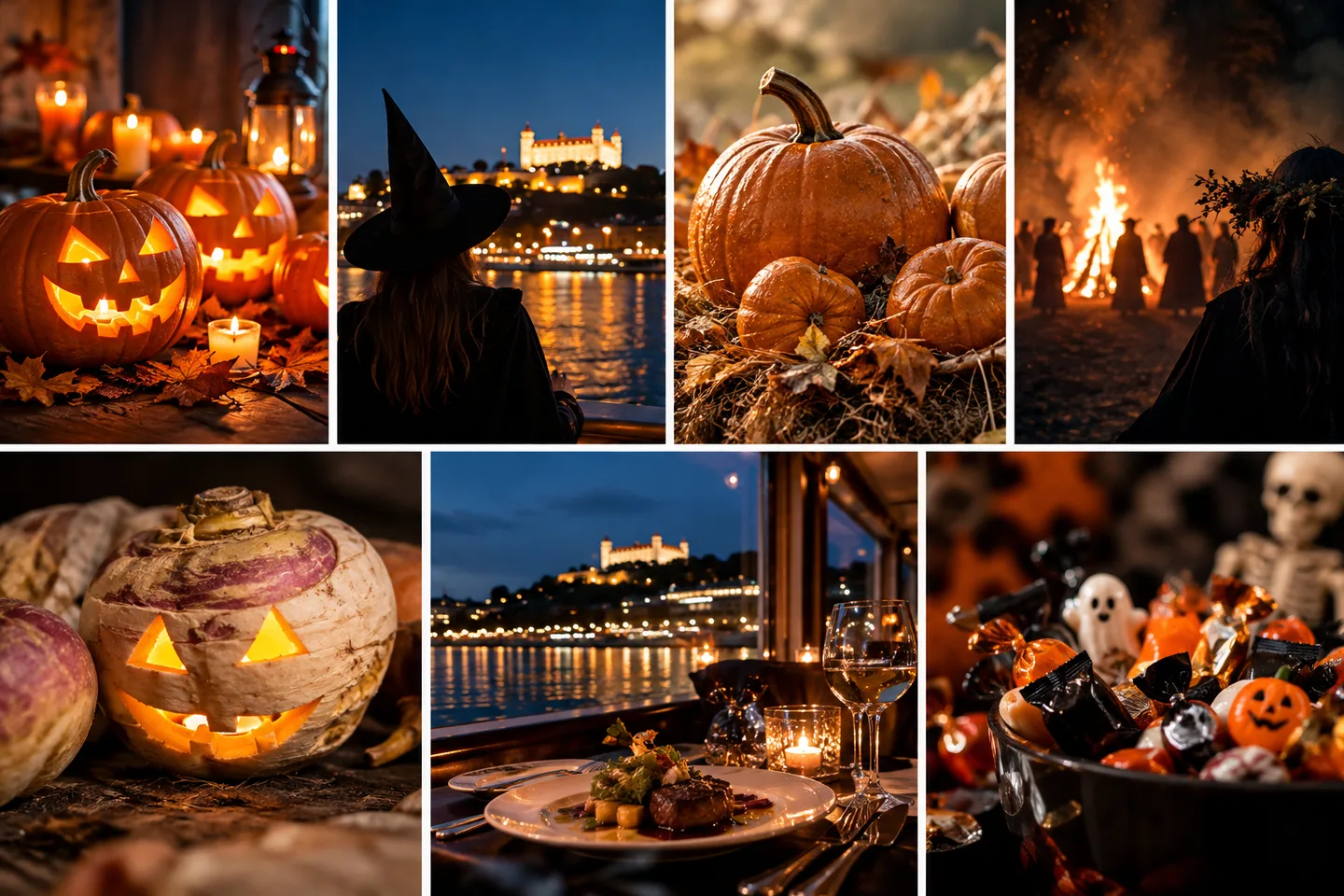
Halloween is best known today as an evening filled with costumes, pumpkins, sweets and a spooky atmosphere. Its history, however, goes back much further and is full of fascinating details. Some of today’s Halloween traditions have their roots in ancient Celtic celebrations, while others developed much later.
Do you know them all?
1. Halloween has its roots in an ancient Celtic festival
One of the predecessors of modern Halloween is considered to be Samhain, an ancient Celtic festival associated with the end of the harvest and the beginning of the winter season. It took place around 31 October and 1 November and represented an important transition from one season to another for Celtic communities
Samhain was not only a celebration of the end of the agricultural season. It was also connected with the belief that, during this time, the boundary between the world of the living and the world of the dead became less distinct. According to later records and traditions, people believed that supernatural beings or the souls of the deceased could appear among the living on this night
Various protective customs were associated with this belief. People lit large bonfires, which had symbolic meaning and may also have formed part of rituals connected with the transition into a new season. Different forms of disguise and masking also appeared, later becoming one of the characteristic elements of Halloween
Samhain was also a time when people prepared for winter. After the harvest, communities had to decide which animals could be kept through the cold season, and society entered the darker and colder part of the year
Even today, Halloween still preserves something of that original atmosphere – night, fire, masks, mystery and the symbolic transition from one season to another
2. Costumes are not a modern invention
Masks and costumes have been associated with Halloween for a very long time. Historical records and later folk traditions mention people dressing up or covering their faces during autumn celebrations. However, we do not know exactly what ancient Celtic celebrations looked like. Historians point out that much of what we know about them comes from later records and traditions
Today’s costumes of witches, ghosts and monsters therefore continue a much older tradition of disguise and masks
3. Pumpkins came later
Today, the carved pumpkin is perhaps the best-known symbol of Halloween. Originally, however, people in Ireland and Scotland carved turnips, beets or potatoes
When the tradition reached North America with Irish immigrants, pumpkins proved to be much more practical for carving. Over time, they became the iconic jack-o’-lantern we know today
So the pumpkin was not there at the very beginning of the tradition, but today it is almost impossible to imagine Halloween without it
4. Trick-or-treating also has a history
Today, “trick or treat” is known as children going from door to door asking for sweets. Its roots, however, can be traced back to older European customs
In England and Ireland, for example, there was a tradition known as “souling”, in which people received food in exchange for prayers for the dead. Over time, similar customs evolved and became connected with Halloween
“Trick or treat” in the form we know today only became widely popular in the 20th century
What began as a simple door-to-door custom gradually became one of the most recognisable Halloween traditions
5. Sweets were not always the main part of Halloween
Today, it is almost impossible to imagine Halloween without sweets. However, the mass distribution of candy is a relatively modern part of the celebration
In the past, traditional door-to-door customs were more often associated with food, drinks or small gifts. It was only during the 20th century that sweets became what children most commonly expected when knocking on doors
Today, Halloween candy feels so essential that many people can hardly imagine the celebration without it
6. Why is it actually called Halloween?
The name Halloween comes from the older term All Hallows’ Eve, meaning the evening before All Saints’ Day. In older English, “hallow” referred to a saint or holy person, while “eve” meant the evening before
Halloween therefore essentially means the eve of All Saints’ Day
The name itself is only one part of a much longer story. Over the centuries, older Celtic customs gradually blended with Christian holidays and local folk traditions across Europe. That is why it is difficult to say that modern Halloween comes from one single festival or tradition
Samhain, the Celtic festival connected with the end of the harvest and the beginning of winter, played an important role in its development. Later, the Christian celebrations of All Saints’ Day and All Souls’ Day, observed on 1 and 2 November, also became part of the broader cultural context. Individual traditions gradually changed, moved between countries and took on new forms
In later centuries, Halloween continued to develop particularly in Ireland, Scotland and eventually North America, where it gained many of its modern features – from costumes and carved pumpkins to trick-or-treating and themed parties
Modern Halloween is therefore the result of centuries of different cultures, customs and beliefs coming together. Behind the name we now know from posters, films and Halloween parties lies a much older and more fascinating story
7. You can experience Halloween a little differently
Today, Halloween does not have to mean only costumes, pumpkins and sweets. It can also be an opportunity to meet friends, colleagues or family and enjoy an autumn evening in a more unusual way – how about on the Danube?
LOD is preparing a special Halloween Dinner Cruise on board the Harmónia on 30 October 2026 at 5:00 PM
You can look forward to a themed pumpkin menu, an approximately one-hour cruise and views of Bratislava by night
So if you would like to experience Halloween a little differently this year, perhaps it is time to swap the haunted house for a boat
And instead of Halloween knocking on your door, this time you can head out onto the Danube yourself